Over the past months, one question has come up repeatedly in our real magnesium gummy projects:
“Why is the magnesium content in gummies always so low?”
This question doesn’t usually come from casual readers. It comes from brand owners, product managers, and buyers who are already working on a magnesium gummy—often after comparing labels on the market or reviewing multiple supplier proposals. Many of them tell me the same thing: “I’ve searched online, but I still can’t find a clear explanation.”
I’m Nicole, Sales Director at Nutreebio. I work closely with customers on magnesium gummy projects every week, and this article is written from that perspective—not a marketing angle, but a manufacturing one. It is based on real customer discussions, formulation trials, and hands-on production experience from our manufacturing side, including recent projects where higher-magnesium gummies were developed and successfully passed third-party testing. My goal here is simple: to explain, as clearly and honestly as possible, why magnesium behaves the way it does in gummies, what is realistically achievable, and where many misunderstandings come from.
1. Where Magnesium in Gummies Actually Comes From
When I speak with customers for the first time about magnesium gummies, a common assumption often comes up—very understandably:
“If we can add vitamins into gummies, why not just add magnesium as well?”
At first glance, this sounds reasonable. After all, vitamin gummies have been around for years, and adding vitamin C or B-complex into a gummy formula is relatively straightforward. However, magnesium behaves very differently.
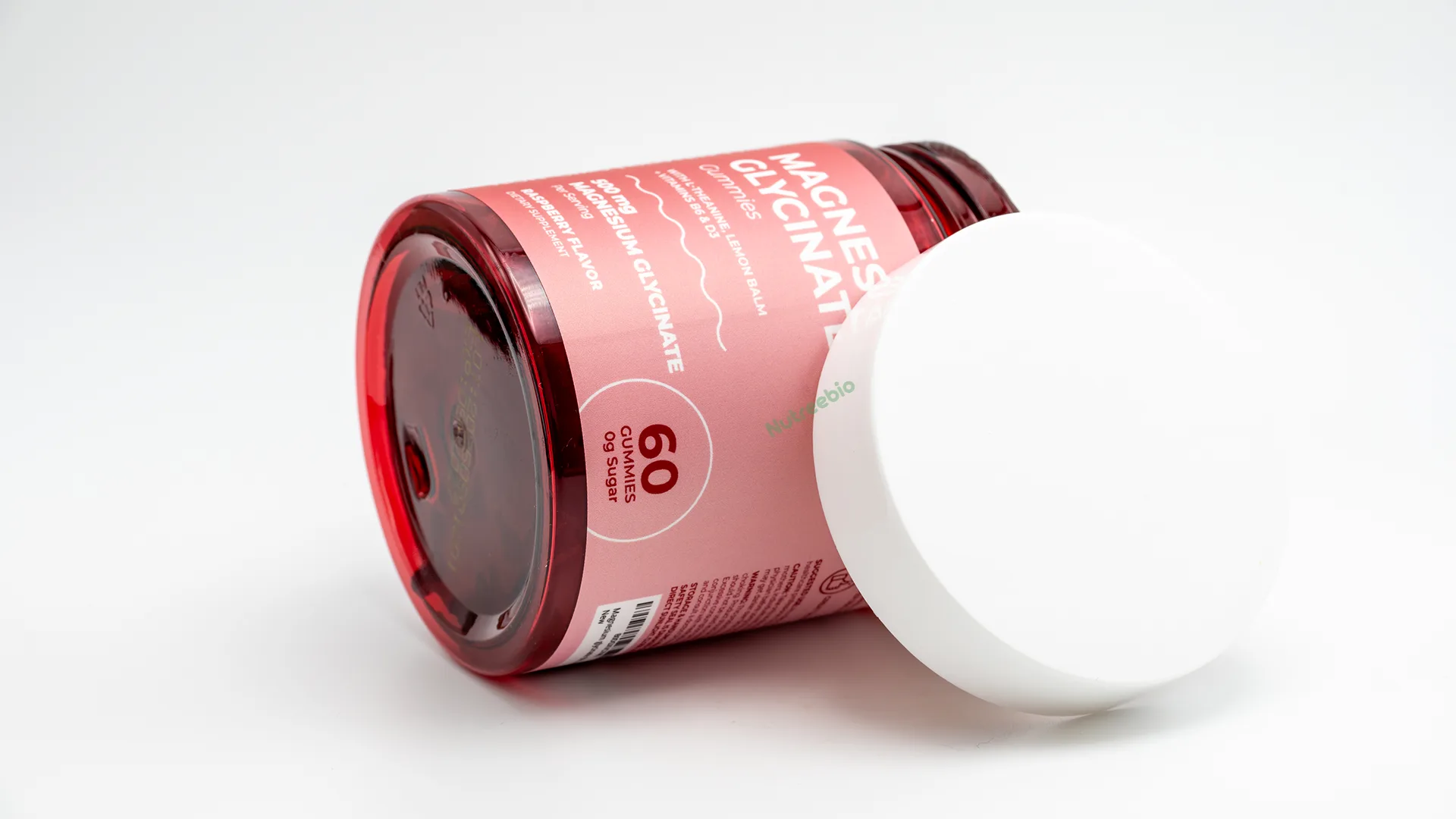
In magnesium gummies, manufacturers are not adding elemental magnesium directly. What is used instead are magnesium compounds or chelated forms, such as magnesium glycinate (or bisglycinate), magnesium citrate, or other organic magnesium salts like magnesium malate. These compounds only release magnesium ions (elemental magnesium, Mg²⁺) after ingestion.
An important detail—often overlooked outside of formulation teams—is that elemental magnesium makes up only a small percentage of these compounds, typically around 14–16%. This means that even when the added amount of a magnesium compound looks significant during formulation, the actual elemental magnesium delivered to the consumer is much lower than many people expect.
This is usually the first moment when customers start to realize that magnesium gummies are not just “vitamin gummies with a different ingredient.” The challenge begins at the raw material level.
2. What “Magnesium” on the Nutrition Label Really Means
Another point of confusion we encounter frequently is the nutrition label itself.
On magnesium gummies—as with all dietary supplements—the magnesium value shown on the label refers specifically to elemental magnesium, not the total weight of the magnesium compound used in the formula. In practice, this means the formulation team must calculate backwards: starting from the compound, determining how much elemental magnesium it can provide, and then confirming whether that amount is realistically deliverable in a gummy format.
This distinction matters more than many people realize. Two products can use the same magnesium compound, yet show very different magnesium numbers on the label depending on serving size, formulation limits, and calculation accuracy.
From our experience, this is one of the most common areas where misunderstandings occur—not due to bad intentions, but because magnesium chemistry simply isn’t intuitive if you’re not working with it every day. Without this conversion logic, it’s easy to assume that increasing the labeled magnesium value is just a matter of adding more raw material, when in reality, the gummy system itself becomes the limiting factor.

3. Why Magnesium Is So Hard to Add to Gummies
(And Why the Dosage Is Often Limited)
From a formulation and manufacturing perspective, magnesium is one of the most challenging minerals to add to gummies at higher dosages. I fully understand our customers' desire to add high doses of magnesium, but this limitation is not a matter of equipment, experience, or willingness—it is rooted in the physical and chemical behavior of magnesium compounds inside a gummy system.
3.1 The Physical and Chemical Nature of Magnesium Compounds
Most magnesium compounds used in dietary supplements are mildly alkaline and have relatively low solubility in the aqueous environment of a gummy formulation. Unlike many vitamins, magnesium does not simply dissolve and “blend in” with the rest of the matrix.
As the dosage increases, undissolved or partially dissolved magnesium compounds begin to interact with other components in the gummy—especially the gelling agents. This interaction is subtle at low levels, but becomes increasingly disruptive as more magnesium is added.
In practical terms, this means that magnesium starts to influence not just nutrition, but the entire structure of the gummy itself.
3.2 How Magnesium Disrupts Gummy Structure
Whether a gummy is made with pectin or gelatin, it relies on a carefully balanced gelling mechanism to achieve the familiar chewy texture, elasticity, and clarity that consumers expect.
When magnesium compounds are added at higher levels, several issues tend to appear:
1) Poor gelation or incomplete setting
The gummy may struggle to fully gel, leading to inconsistent shapes or weak structure.
2) Loss of elasticity and structural integrity
Gummies become softer, less resilient, or prone to deformation during drying and storage.
3) Powdery or sandy mouthfeel
Undissolved particles or disrupted gel networks result in a dry, chalky sensation when chewing.
4) Bitterness or metallic off-notes
As magnesium concentration rises, taste issues become increasingly difficult to mask, even with strong flavor systems.
These effects are not unique to one type of gummy base. Both pectin-based and gelatin-based systems are affected, because magnesium ions interfere with the normal bonding and cross-linking processes that give gummies their structure.
This is why, in real production environments, magnesium dosage cannot be increased indefinitely without consequences. At a certain point, the gummy no longer behaves like a traditional gummy—it becomes unstable, unpleasant to eat, or both.
3.3 An Unavoidable Manufacturing Reality
It’s important to emphasize that this is not a flaw in formulation skill or manufacturing control. It is an unavoidable physical limitation of how magnesium behaves within gummy systems.
Many customers are surprised by this, especially when they compare magnesium gummies to vitamin gummies. Vitamins typically require much smaller quantities and do not interfere with gelling mechanisms in the same way. Magnesium, on the other hand, is required in much higher gram-level amounts, which places far greater stress on the formulation.
Understanding this limitation is key to setting realistic expectations—and to evaluating magnesium gummy products on the market more critically.

4. How Much Magnesium Can Gummies Realistically Provide in Production?
When customers ask this question, they are usually hoping for a clear number. From a manufacturing point of view, however, the answer is best explained through real development experience, not theory.
In most of our magnesium gummy projects, we work with a standard gummy size of around 3 grams per piece, which is very common in the market. During R&D and pilot trials, we test different magnesium compounds and gradually increase dosage while monitoring three key factors: gelation, texture, and stability.
Based on repeated formulation trials, we consistently see that the maximum practical addition level of magnesium compounds per gummy is usually below 50 mg. Once converted, this typically delivers around 7 mg of elemental magnesium per gummy.
If the serving size is set at two gummies, that results in approximately 14 mg of elemental magnesium per serving. This range is not a conservative estimate—it is what remains stable, chewable, and visually acceptable after production, drying, and storage.
In some projects, we have successfully developed higher-magnesium gummies that can pass third-party testing. However, even in those cases, the dosage is achieved only through careful adjustments and clear acceptance of trade-offs, which we’ll discuss later. What’s important to understand is that these numbers come from what actually survives real production conditions, not what looks good on a formulation spreadsheet.
From a manufacturing perspective, this dosage range represents a realistic balance between functionality, consumer experience, and product stability.
5. Why Do Many Magnesium Gummies on the Market Claim Higher Dosages?
This is a question we approach very carefully.
There are several reasonable explanations for why magnesium gummies on the market may claim 70 mg, 100 mg, or even 200 mg of magnesium per serving.
In some cases, the difference comes from how magnesium compounds and elemental magnesium are understood or calculated. As discussed earlier, confusion between compound weight and elemental magnesium can easily lead to inflated expectations if conversions are not fully understood.
In other cases, brands may use non-traditional formulation systems that prioritize higher mineral loading over classic gummy texture. These products may still meet their intended purpose, but they often feel very different from what consumers expect from a traditional gummy.
There are also situations where products have not undergone independent third-party testing, meaning the label declaration reflects formulation targets rather than verified finished-product results. This does not necessarily indicate bad intent—it may simply reflect different quality control standards or development stages.
From a manufacturing standpoint, when a gummy product claims a very high magnesium content and maintains a soft, clear, pleasant gummy texture, it is reasonable to look more closely at how that number was achieved and whether it has been independently verified.
Ultimately, whether or not pectin or gelatin is used, it cannot fundamentally solve the problem of "high-dose magnesium". Magnesium dosage alone does not tell the full story. Texture, taste, stability, and transparency in labeling are equally important—and understanding the trade-offs behind those numbers is essential for making informed decisions.
6. Can Magnesium Dosage Be Increased? Yes — But Only with Trade-Offs
This is often the next question customers ask after understanding why magnesium is difficult to formulate into gummies:
“If higher dosage is so challenging, is there any way to increase it?”
The honest answer is yes—but only if brands and consumers are willing to accept that the product may no longer feel like a traditional vitamin gummy. In our experience, there are two main approaches that can push magnesium dosage higher, each with clear compromises.
6.1 Option One: Using Composite Gelling Systems
One approach is to move away from a single gelling agent and adopt a composite gel system, such as:
Pectin combined with carrageenan
Pectin combined with gelatin
These systems are more tolerant of higher mineral loads and can better accommodate magnesium compounds without complete structural failure. From a technical standpoint, this allows formulators to add more magnesium than would be possible in a conventional gummy base.
However, the trade-offs are noticeable.
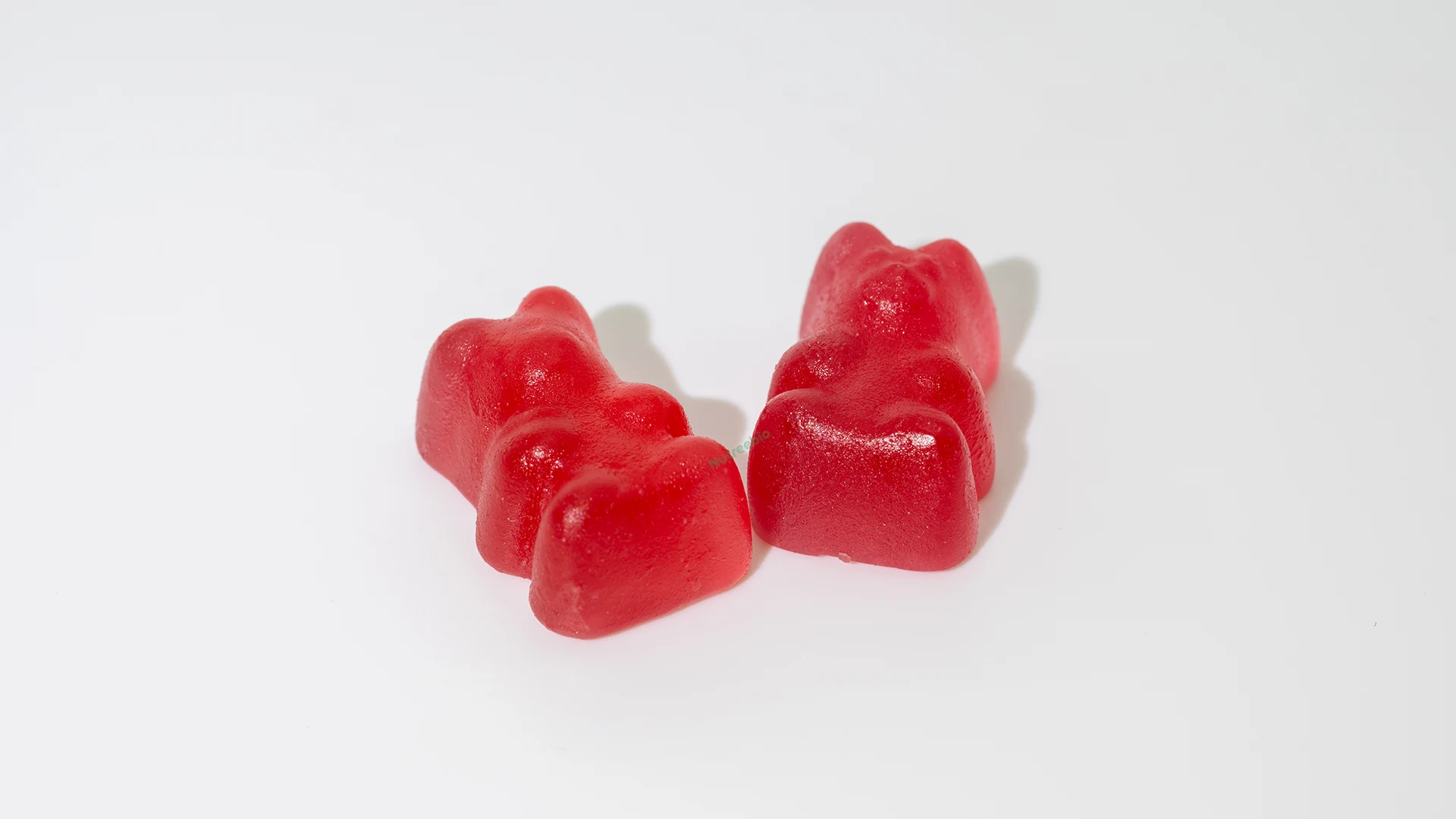
Gummies produced with composite gels often have a less elastic, slightly sandy texture, and they tend to lose the transparency and visual clarity associated with classic gummies. Colors may appear more opaque, and the overall bite feels firmer and more functional.
In many cases, the final product resembles a chewable functional block rather than a familiar candy-like gummy. For certain product concepts, this may be acceptable—or even desirable—but it is a meaningful shift that brands must communicate clearly to consumers.
Using this approach, it is possible for two gummies per serving to deliver up to around 100 mg of elemental magnesium, provided that taste, texture, and appearance compromises are accepted.
6.2 Option Two: Increasing Serving Size
Another, more technically stable approach is simply to increase the serving size—either by making each gummy heavier or by increasing the number of gummies per serving.
From a manufacturing perspective, this method is often more predictable and less disruptive to gummy structure. By spreading the magnesium load across more mass or more pieces, the formulation remains within workable limits.
That said, this solution comes with its own challenges. Larger gummies or higher serving counts may be less attractive from a marketing and consumer convenience standpoint. Some consumers prefer small, easy-to-eat gummies, and increasing serving size can feel counterintuitive in a market where simplicity is valued.
Still, for brands that prioritize nutritional delivery over minimal serving size, this approach can be a practical and honest way to increase magnesium intake without compromising stability.
6.3 Choosing the Right Direction
In our experience, there is no universally “correct” solution—only choices that align better or worse with a brand’s positioning.
Higher magnesium dosage is achievable, but it requires clear decisions about texture, appearance, serving size, and consumer expectations. The key is transparency: understanding what changes are being made, why they are necessary, and how they affect the final product experience.
7. Industry Realities Brands Must Accept
After working on numerous magnesium gummy projects, one reality becomes very clear:
Great taste, high magnesium dosage, and a classic gummy texture rarely coexist in the same product.
This is not a limitation of one factory or one formulation team—it is an industry-wide reality rooted in chemistry and structure. When magnesium dosage increases, something else must give: texture, clarity, mouthfeel, or consumer familiarity.
From a manufacturing perspective, the more responsible approach is not to chase the highest possible number on a label, but to define a magnesium level that is technically achievable, stable, and honest. This helps avoid misleading consumers and protects brands from long-term trust issues caused by unrealistic claims or inconsistent products.
In our experience, brands that take a transparent and rational approach—explaining what their product can realistically deliver and why—tend to build stronger, longer-lasting credibility in the market. If more brands adopt this mindset, magnesium gummy labeling as a whole will gradually become clearer and more aligned with real product performance.
8. Practical Advice for Brands and Buyers
For brands and buyers evaluating magnesium gummies, a few practical steps can make a significant difference.
Before trying to replicate or benchmark a competitor’s product, it is worth verifying the actual elemental magnesium content through third-party testing. This often provides clarity that label numbers alone cannot.
We also recommend working closely with manufacturers to develop sample versions at different magnesium levels. Seeing, tasting, and comparing these options side by side helps brands understand the real trade-offs between dosage, texture, and consumer experience.
Most importantly, the goal should not be to pursue the highest possible number, but to choose a formulation that best fits the brand’s positioning, target audience, and long-term strategy. Magnesium gummies are not one-size-fits-all—and informed decisions lead to better products.