Sour gummies are popular for a simple reason: they offer two different taste experiences in one bite. The sour coating delivers an immediate tangy sensation, followed by the sweetness and fruity flavor of the gummy inside.
For gummy manufacturers, however, creating that experience involves more than mixing citric acid with sugar and applying it to the surface. The coating needs to adhere properly, deliver a pleasant level of sourness, and remain stable during packaging and storage. When a brand also requires low sugar content, the formulation becomes more complicated.
Can a sour gummy coating be made with very little sugar? What happens if sugar alcohols are not allowed? Could manufacturers simply use pure citric acid or malic acid instead?
These are questions we recently worked through at Nutreebio while developing a new sour apple gummy for a UK snack brand. The customer wanted a more exciting sweet-and-sour taste while maintaining a strict sugar requirement: less than 1 g of sugar per 45 g pack, with no sugar alcohols in the formulation. We developed two sample options, arranged third-party sugar testing, and evaluated the manufacturing risks. Interestingly, the customer's preferred sample was not the formulation they ultimately chose for production.
Before sharing that experience, it helps to understand how sour candy coating works and why low-sugar gummies require special consideration.
1. What Is Sour Candy Coating?
Sour candy coating is a surface treatment used to give gummies, jellies, and other confectionery products a tangy outer layer.
It is commonly found on sour gummy worms, sour gummy bears, fruit-shaped gummies, and other sour gummy candy.
Unlike a regular gummy, where sourness comes mainly from acids incorporated into the gummy base, a coated sour gummy delivers much of its initial sourness directly from the surface. This creates a different eating experience. When the gummy first touches the tongue, the acidic coating produces an immediate sour sensation. As the coating dissolves and the gummy is chewed, the sweeter flavor of the interior becomes more noticeable. The contrast between the sour exterior and sweeter center is what many consumers enjoy about sour gummies.
1.1 What Ingredients Are Used in Sour Candy Coating?
Traditional sour coating usually contains three main types of ingredients:
- Sugar or sugar substitutes: Provide sweetness, help balance acidity, and contribute to the texture of the coating.
- Citric acid: Delivers a sharp, bright sourness commonly associated with citrus fruits.
- Malic acid: Provides a smoother, more lingering sourness that works particularly well with apple and other fruit flavors.
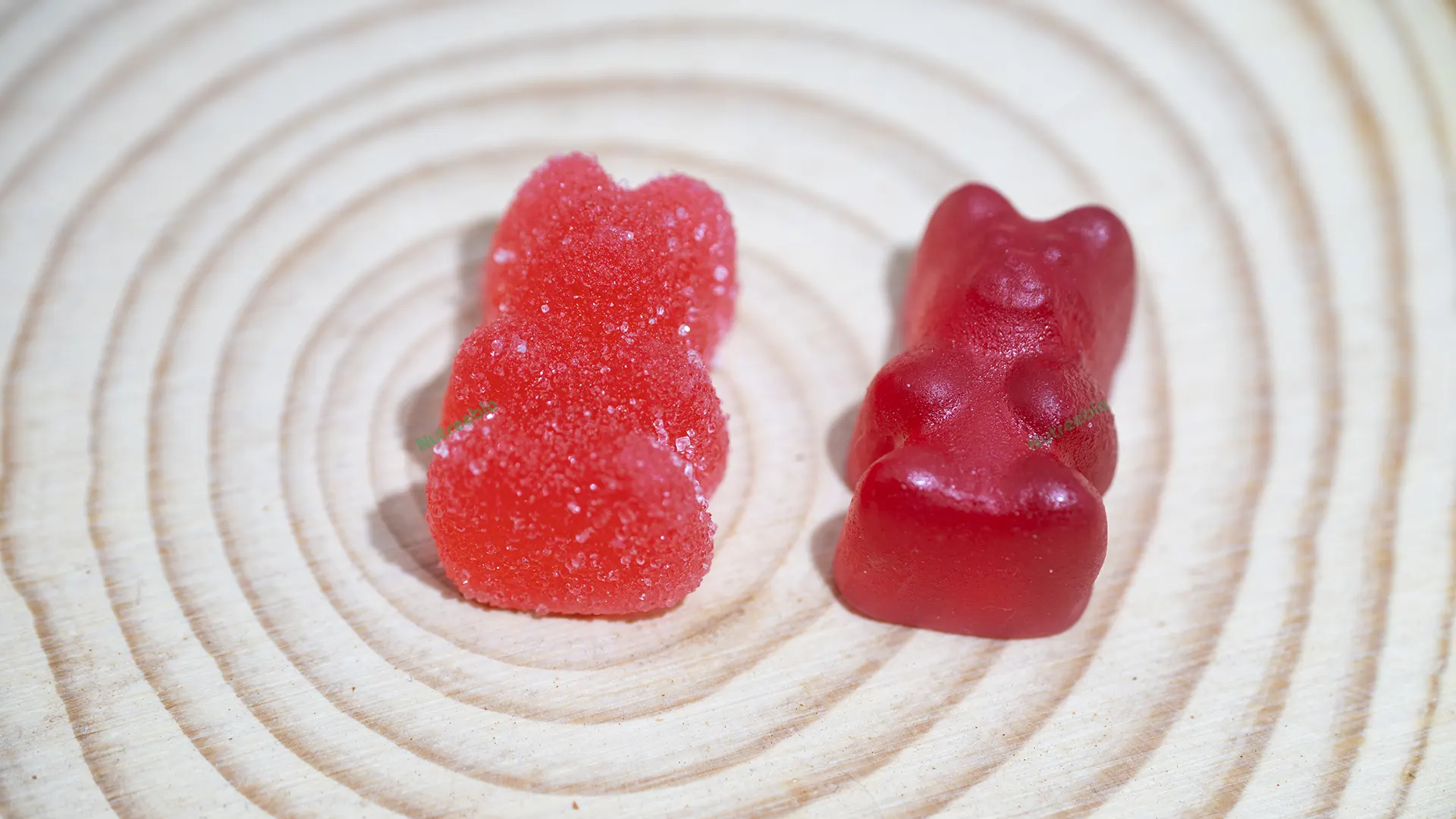
The ingredients are blended into a dry powder and applied to the surface of the gummies.
For conventional sour gummy candy, granulated sugar is often used as the main carrier. It creates the familiar crystalline appearance and helps prevent the sourness from becoming overwhelming. Sugar alcohols, such as erythritol, may also be considered for certain reduced-sugar formulations, depending on the product requirements and target market.
However, selecting the ingredients is only one part of the process. Particle size, the ratio of acids to the carrier, gummy surface conditions, and moisture exposure can all affect the finished coating. A formula that tastes good immediately after coating may behave differently after several weeks in its packaging.
1.2 Citric Acid vs. Malic Acid: Which Is Better for Sour Gummies?
Both citric acid and malic acid are widely used in sour candy formulations, but they produce slightly different taste profiles.
Citric acid generally gives a sharp, immediate sour sensation. It works well with lemon, lime, orange, and other bright fruit flavors.
Malic acid tends to provide a more rounded, longer-lasting sourness. It is particularly suitable for apple, berry, and other fruity profiles where the sour taste should remain noticeable during chewing.
For a sour apple gummy, using both acids can create a more balanced result than relying on either one alone. Citric acid contributes the initial tartness, while malic acid supports the lingering apple-like sourness. That does not mean a fixed ratio will work for every gummy. The appropriate acid combination depends on the flavor system, existing acidity of the gummy base, desired sweetness, and whether the acids will be used internally or as an external coating.
In our UK apple gummy project, citric acid and malic acid were considered both for the external sour coating and for adjusting the sourness of the gummy itself. As the development progressed, this distinction became important.
2. How Is Sour Coating Applied During Gummy Manufacturing?
The common industrial method for applying sour sugar coating is often called acid sanding.
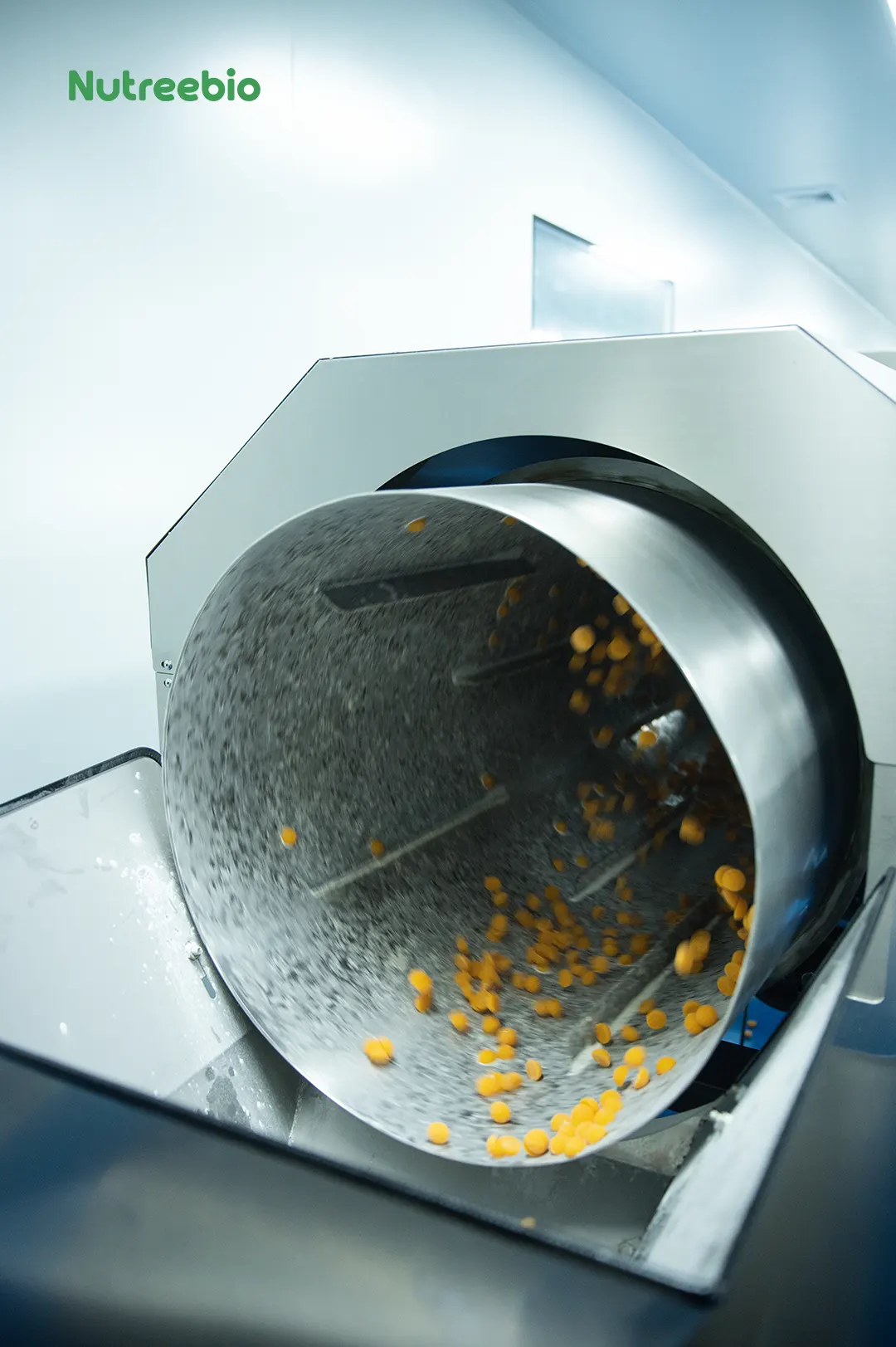
In a typical process, gummies are prepared and conditioned to reach suitable surface properties. The sour coating ingredients are mixed separately, and the gummies are then tumbled with the powder to allow it to adhere. The coating is distributed through the movement of the gummies and their contact with the powder mixture. It is not normally applied by measuring an identical quantity of powder onto every individual gummy. This is an important practical difference.
Even when the same coating mixture is used, the amount that attaches to each piece may vary. Several factors can influence coating adhesion:
1) Gummy shape and surface area
Different gummy shapes have different surface areas and contours.
A flat or irregularly shaped gummy may retain coating differently from a smooth, rounded gummy. Recessed areas may also collect more powder.
2) Surface moisture
The condition of the gummy surface affects how well dry coating particles attach.
A surface that is too dry may not retain enough powder. Excessive surface moisture, on the other hand, can cause the coating to dissolve, clump, or become uneven.
3) Coating particle size
Fine particles and larger sugar crystals behave differently during mixing and adhesion.
Particle size can affect both the coating appearance and the sensation in the mouth.
4) Tumbling conditions
Mixing time, movement, batch loading, and other equipment settings influence powder distribution.
Longer mixing does not automatically produce a more uniform result.
5) Gummy formulation
The underlying gummy base also matters. Different sweetener systems, gelling agents, moisture levels, and surface characteristics can influence coating performance.
These variables can be managed through formulation development and process controls, but the natural variation in coating weight still needs to be considered.
For ordinary sour candy, a small difference in coating weight between individual pieces may not be a serious concern. For low-sugar gummies with a strict sugar specification, however, that variation becomes much more important.
For a broader comparison of sugar, wax, oil, powder, and other surface treatments, see our earlier guide: 6 Types of Gummy Coatings: Sugar, Oil, Wax & More.
3. Why Is Sour Coating More Challenging for Low-Sugar Gummies?
A conventional sour coating usually relies on sugar to balance the acidic ingredients and create the desired surface texture. When a brand wants to reduce the sugar content, the manufacturer needs to reconsider that coating system. The difficulty is not simply whether the amount of sugar can be reduced. It is whether the finished product can achieve the required flavor, texture, and sugar specification consistently during commercial manufacturing.
3.1 Sugar Coating Adds Sugar to the Finished Product
This sounds obvious, but the actual amount added through surface coating is not always easy to determine at the individual-gummy level.
In a traditional sugar-and-acid coating, some powder remains attached to the gummies while some may remain in the coating equipment. The final amount depends on the process and surface conditions. If a product has a generous sugar allowance, moderate coating variation may be acceptable within its established specifications.
But consider a gummy brand that promises less than 1 g of sugar in an entire pack. The manufacturer must account for sugars already present in the gummy base as well as any sugar added through the external coating. A good result from one sample does not automatically establish how consistently that target can be maintained during future production.
This was one of the main concerns in our UK project.
3.2 Sugar Alcohols Are Not Always an Option
One possible approach is to replace the sugar carrier with a sugar alcohol.
Erythritol, for example, may be considered in certain low-sugar or sugar-free confectionery formulations.
However, ingredient restrictions are often driven by brand positioning rather than technical feasibility alone. Some brands choose to avoid sugar alcohols because of consumer preferences, ingredient-list considerations, or their own product philosophy. When a customer explicitly excludes sugar alcohols, the manufacturer's options become narrower.
A technically possible formulation is not necessarily a suitable formulation for that brand.
3.3 Pure Acid Coating Creates New Problems
Another idea is to remove the sugar carrier entirely and use only food-grade acids.
At first glance, this seems like a simple solution. If no sugar is added through the coating, the additional sugar contribution from the coating is eliminated. However, pure acid coating can introduce other challenges. Without sugar or a suitable carrier to moderate the taste, the sourness may become too intense.
Citric acid and malic acid can also be sensitive to moisture, depending on their physical form and the surrounding conditions. When an exposed coating absorbs moisture, the surface may become damp or sticky. This can affect the appearance, mouthfeel, and handling of the gummies during packaging and storage. There may be ways to improve an acid-based coating through different ingredient grades or coating systems, but such approaches require their own evaluation.
A pure-acid coating should not be assumed to work simply because it contains no sugar.
3.4 Low Sugar Content Must Be Considered at the Pack Level
Brands often communicate sugar content per serving or per pack.
Manufacturers therefore need to consider not only individual gummy variation but also the combined sugar content of the packaged product. For example, a pack may contain multiple gummies with slightly different amounts of attached coating. Whether that variation affects the declared sugar content depends on the gummy base, coating formulation, manufacturing controls, sampling plan, and applicable labelling rules.
It is also important to distinguish between low sugar, sugars-free, and no added sugars. These expressions are not interchangeable. In the UK, they are subject to different conditions under nutrition claims legislation. For solid foods, a low-sugars claim generally requires no more than 5 g of sugars per 100 g, while a sugars-free claim requires no more than 0.5 g per 100 g. A product that meets one definition does not necessarily meet the others.
For brands developing low-sugar gummies, the intended claim should therefore be discussed before finalizing the coating system, rather than after the product has already been manufactured.
4. Four Ways to Develop Sour Gummies with Less Sugar
When a brand wants the taste of sour gummy candy but needs to limit sugar content, there are several possible formulation directions.
Each has advantages and limitations.
| Formulation Approach | Main Advantage | Main Consideration |
|---|---|---|
| Traditional sugar-and-acid coating | Strong sweet-and-sour contrast and familiar crystalline texture | Adds sugar; coating weight needs control |
| Sugar alcohol-based sour coating | May help reduce sugar contribution | Ingredient restrictions, taste and coating performance |
| Pure acid coating | Avoids adding sugar through the coating | Excessive sourness, moisture sensitivity and adhesion challenges |
| Internal sour flavor without external coating | Sourness can be developed within the gummy itself | Does not provide the same immediate sour outer layer |
Option 1: Traditional Sugar-and-Acid Coating
This is the most familiar approach for sour gummies.
Sugar is blended with food-grade acids, and the mixture is applied to the gummy surface.
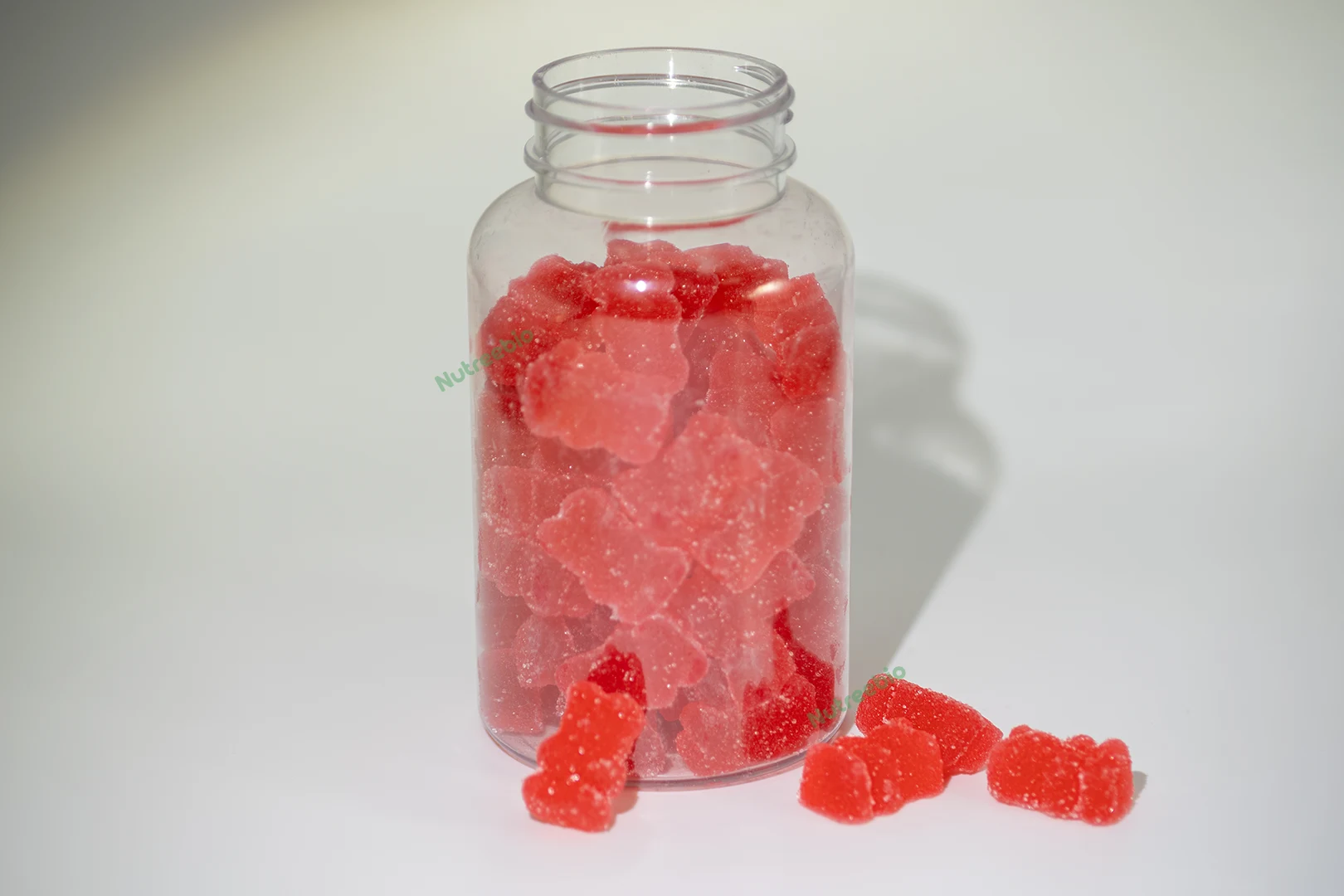
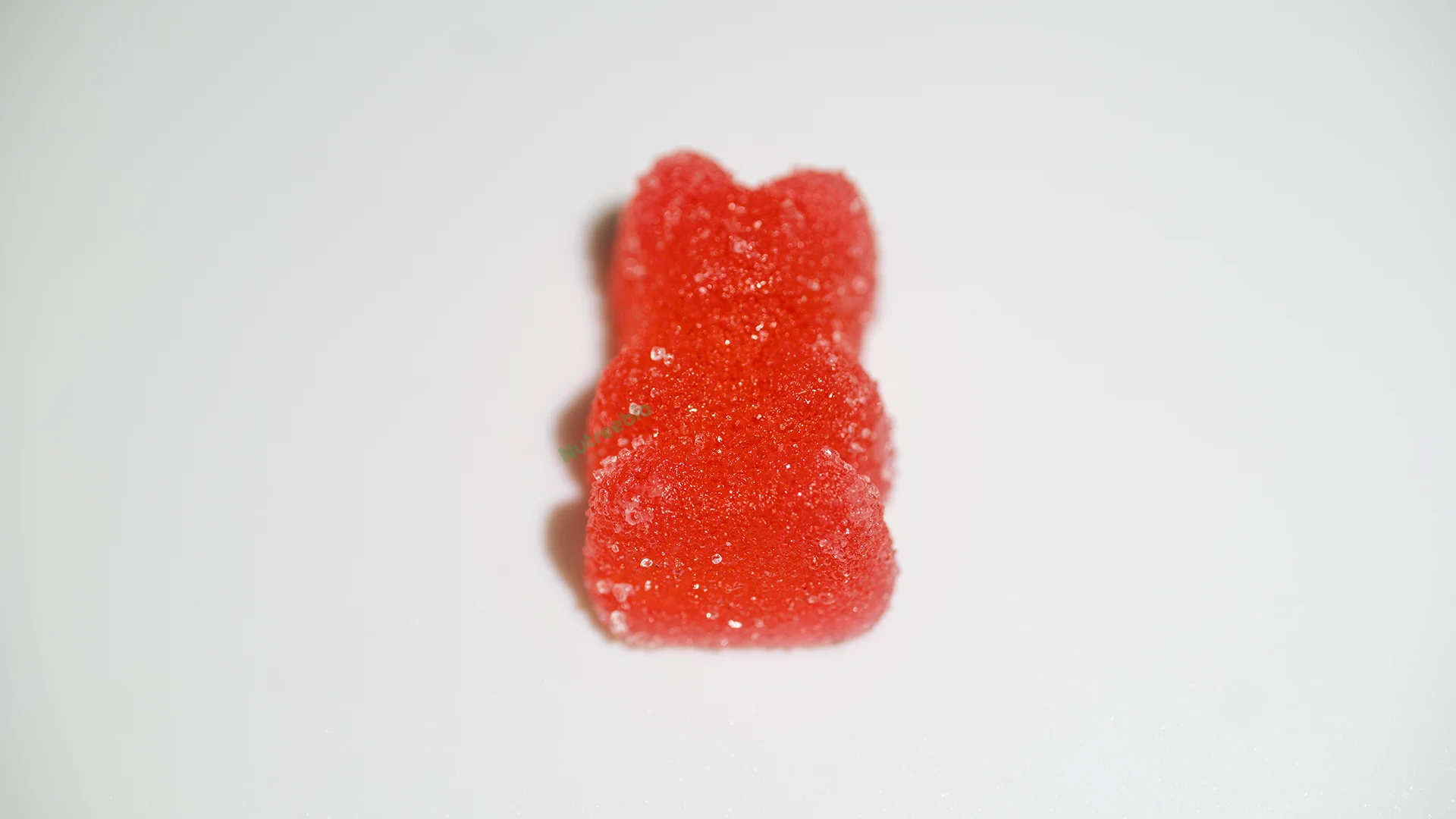
It provides a recognizable sour-candy experience: an initial tart sensation, some crystalline texture, and a sweeter gummy center.
The drawback for low-sugar gummies is the additional sugar introduced by the coating.
This approach can still be considered if the formula and production process allow the finished product to meet its sugar specification.
However, it requires careful evaluation rather than relying solely on a sample's appearance or taste.
Option 2: Sugar Alcohol-Based Sour Coating
Replacing sugar with a suitable sugar alcohol can help address some sugar-content constraints.
This may be useful where the brand accepts sugar alcohols and the chosen coating system delivers suitable texture and stability.
It is not a universal substitute.
The mouthfeel, sweetness, particle behavior, and moisture response may differ from those of traditional sugar.
Additionally, some customers exclude sugar alcohols altogether.
In that situation, this option may be technically feasible but commercially unacceptable.
Option 3: Pure Acid Coating
A coating made primarily or entirely from acidic ingredients may appear attractive for products trying to avoid sugar-based surface treatments.
However, removing the carrier also changes the sensory experience.
The resulting sourness can be aggressive rather than pleasantly tart, and exposed acidic particles may be more difficult to manage under humid conditions.
Whether this approach is suitable depends on the acid system, processing method, intended sensory profile, and packaging conditions.
For the apple gummy project discussed below, our laboratory did not recommend a pure-acid coating.
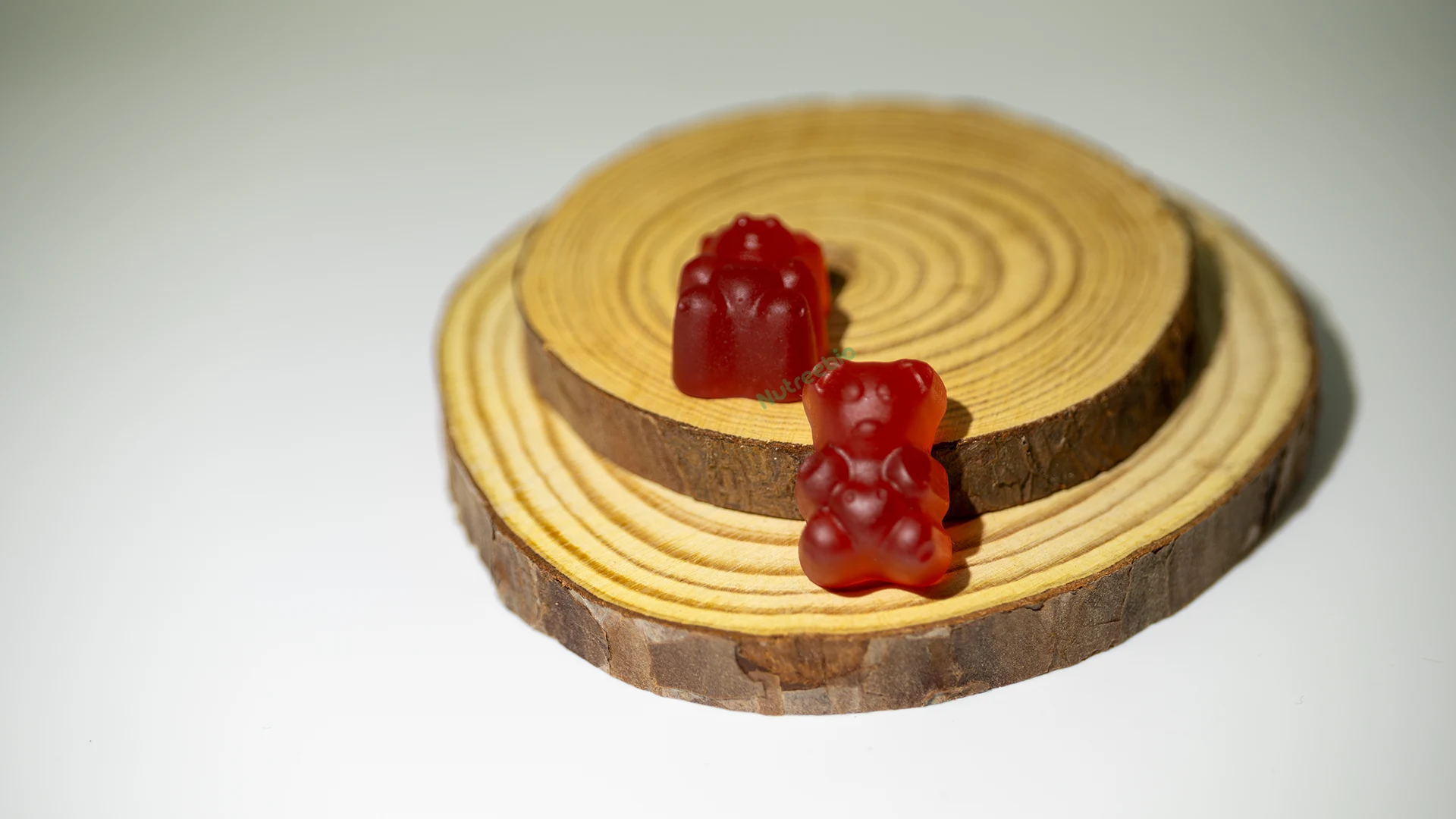
Option 4: Sour Flavor Inside the Gummy Without External Coating
Instead of concentrating the sourness on the surface, manufacturers can adjust the gummy formulation itself.
Citric acid, malic acid, or other suitable acidulants can be incorporated into the gummy system to develop the desired fruit acidity.
This produces a different eating experience.
The sourness is more closely integrated with the fruit flavor rather than delivered as a separate outer layer.
There is no sour powder coating to manage, although the gummy base still needs to be evaluated for texture, acidity, processing performance, and shelf stability.
For our UK customer, this eventually became the preferred manufacturing direction.
The reason was not that the coated sample tasted bad.
In fact, the opposite was true.
5. Real Factory Case Study: Developing a Low-Sugar Sour Apple Gummy for a UK Brand
In early June, our team at Nutreebio began developing a new apple-flavored gummy for an existing UK snack brand.
We had already worked with the customer on their gummy products, so we understood their brand positioning and basic formulation requirements. Their existing product was marketed with a strict sugar target: less than 1 g of sugar per 45 g pack. The brand also had a clear ingredient restriction: no sugar alcohols.
For the new apple flavor, the customer wanted something different. They felt that a simple sweet gummy would not be exciting enough and asked whether we could add a sour coating to create a more layered taste.
It was a reasonable request.
Sour apple is a natural fit for sour gummy candy, and a tangy outer coating can make the flavor feel more distinctive. But the customer's sugar restriction changed how we had to approach the development.
5.1 The First Challenge: Could We Use Sugar in the Coating?
Our initial discussion focused on the coating ingredients. A conventional sour coating could be produced with white sugar, malic acid, and citric acid. Normally, we might also consider erythritol as an alternative carrier in a lower-sugar formulation.
However, because the customer specifically prohibited sugar alcohols, erythritol was excluded from the project. That left the traditional white-sugar coating as a possible option. The question was whether we could keep the attached coating quantity low enough to support the customer's sugar requirement.
Before preparing the samples, we discussed this with our laboratory team. Their feedback was straightforward. In production, sour coating is applied by mixing the powder ingredients and tumbling the gummies until the powder attaches to their surfaces. It is not possible to assume that every piece will retain exactly the same quantity of coating. The attached amount may be affected by the gummy shape, surface moisture, mixing conditions, and other processing variables. Even gummies coated together in the same batch may not have perfectly identical surface coverage.
We explained this limitation to the customer before sampling. The customer understood the concern but still wanted to try the coated version. Rather than stopping the project, we decided to prepare an alternative at the same time.
5.2 Two Sample Directions Instead of One
We developed two apple gummy samples.
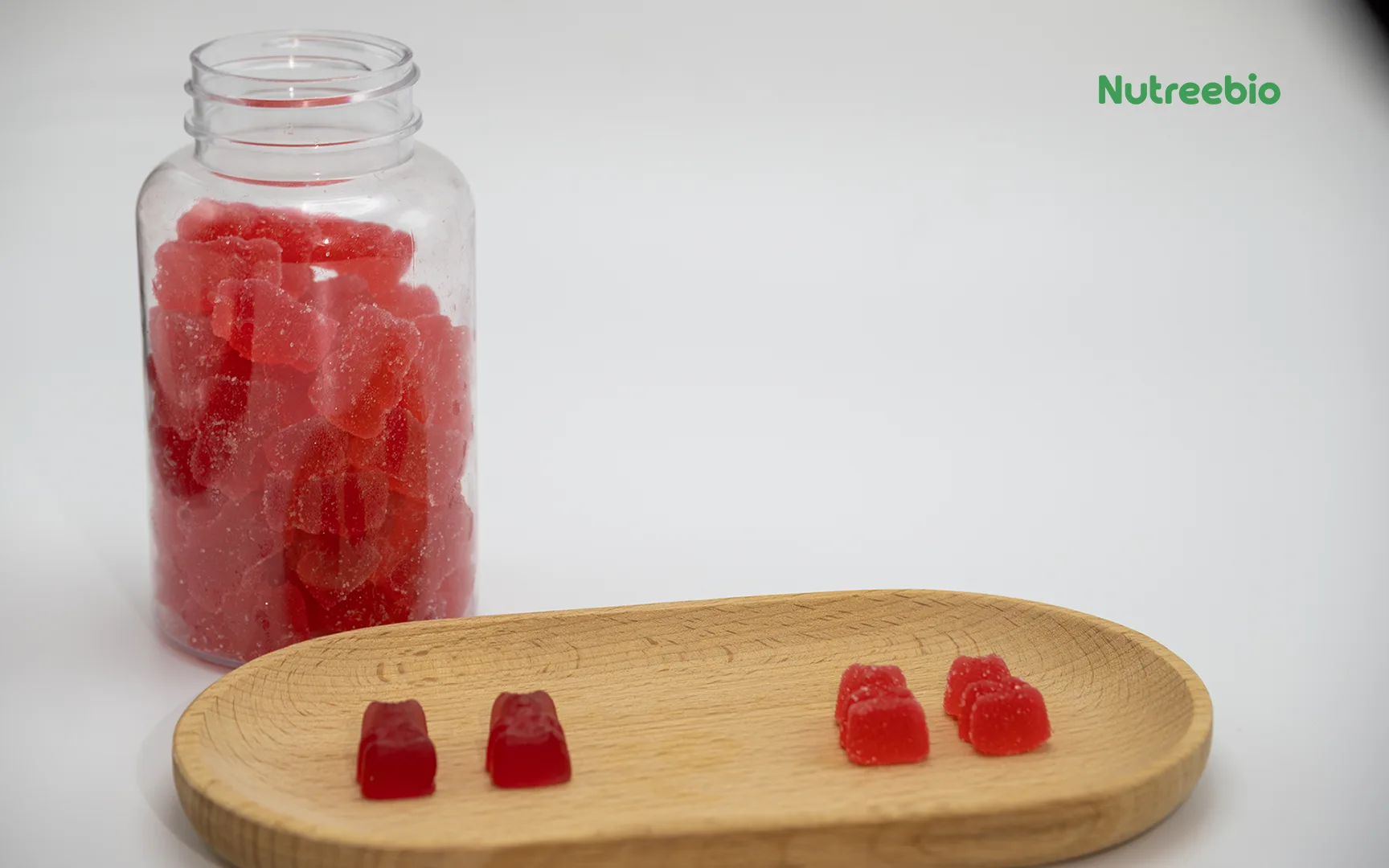
Sample A: Traditional Sour-Coated Apple Gummies
For the first sample, we used a conventional sour coating containing white sugar and food-grade acids.
The purpose was to create the layered flavor experience the customer had requested.
We wanted the first taste to be distinctly sour, followed by the sweeter apple gummy inside.
This version was closest to the customer's original concept.
Sample B: Sour Apple Gummies Without External Coating
For the second sample, we removed the external sour coating and adjusted the acidity of the gummy formulation itself.
Our laboratory worked with citric acid and malic acid to strengthen the apple's natural tartness. The goal was not to reproduce the exact sensation of a coated gummy. Instead, we wanted to create an enjoyable sour-sweet apple flavor without relying on a sugar-based external coating. Both versions were prepared and shipped to the customer.
Meanwhile, we retained samples of the sour-coated version for further evaluation.
5.3 Third-Party Sugar Testing: An Encouraging Result
After sampling, we sent the retained sour-coated gummies to an independent laboratory for sugar analysis.
This was an important step because the coated version contained white sugar in its surface mixture. We wanted analytical information to support the customer's evaluation instead of making assumptions based only on the formula. The results were encouraging.
The laboratory reported "Not Detected" for all six individual sugars listed in the test:
- Fructose
- Galactose
- Glucose
- Sucrose
- Lactose
- Maltose
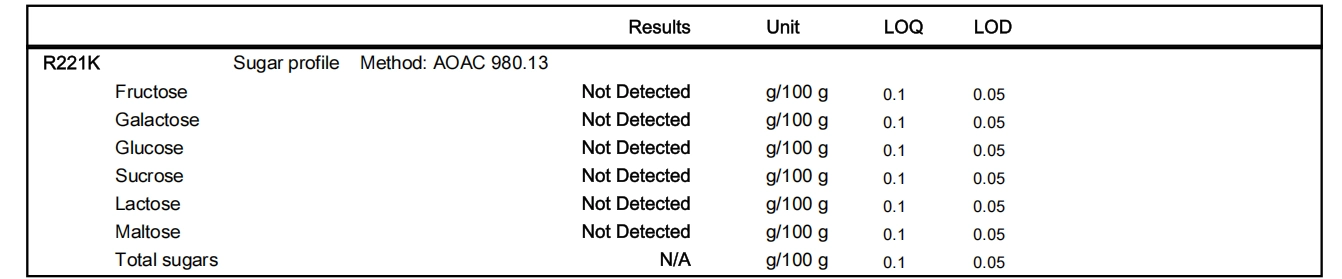
In other words, none of those measured sugars was detected in the submitted sample using the laboratory's reported analytical method. The report's separate Total Sugars field was marked N/A, so the result should be described accurately as no detectable amounts of the listed individual sugars, rather than an independently reported total-sugars value of exactly zero.
For the customer, the result was certainly positive.
Even with a white-sugar-based coating, the analyzed sample did not show detectable quantities of the listed sugars. However, we did not treat the result as proof that every gummy produced in the future would have exactly the same composition. We explained the limitation when sharing the report.
The test represented the submitted sample. It did not establish that the amount of coating attached to every individual gummy would remain identical during commercial production. A laboratory result of "Not Detected" also needs to be interpreted in relation to the analytical method and its detection limits. Our concern was not that the laboratory result was unreliable.
It was that a successful sample result and consistent commercial-scale manufacturing are two different questions.
5.4 Why the Customer Still Preferred the Coated Sample
When the customer received both versions, their feedback was very positive. They liked the uncoated apple gummy. It had a soft but pleasantly chewy texture, with a balanced sweet-and-sour flavor. It was not simply a sweet gummy with a little extra acidity. The apple flavor had enough tartness to make the product enjoyable.
However, the customer personally preferred the sour-coated version. Their reason was the contrast between the outer and inner layers. The surface delivered an immediate sour taste. Once they started chewing, the sweeter gummy underneath provided a different sensation. That combination made the product feel more distinctive.
From a purely sensory perspective, the coated version had achieved exactly what the customer initially wanted. The third-party test result also strengthened their confidence in the sample. If we had been considering taste alone, the coated version would have been the more obvious choice.
But the customer's wider team raised another question.
What would happen when the formula moved from laboratory samples to a full commercial order?
That was where the discussion changed.
5.5 The Real Concern Was Commercial Production Consistency
The customer was not only evaluating whether one batch of samples could meet the desired sugar result. They were considering how the product would perform during ongoing production. If coating adhesion varied between gummies, the amount of sugar introduced through the coating could also vary. The finished product would therefore need appropriate production controls and verification to confirm that its sugar specification could be maintained.
There was also a sensory consideration. If some gummies retained more acid coating than others, the intensity of the initial sourness could differ between pieces. A small variation might be acceptable for conventional sour candy. For a brand selling a carefully positioned low-sugar snack, however, it was another factor worth evaluating.
We discussed these concerns openly with the customer.
The issue was not that sour coating could never be used in a low-sugar product. It was that we had not established sufficient production-scale consistency for this particular formulation and the customer's requirements. We did not want to promise a level of consistency that had not yet been demonstrated.
5.6 Could We Use a Coating Made Only from Acid?
Before finalizing the formulation, we considered another possible solution.
Could we remove the sugar entirely and apply a coating made from citric acid and malic acid? This would avoid adding sugar through the external coating.
We returned to our laboratory team to discuss the feasibility. Their recommendation was not to use a pure-acid coating for this product.
The first problem was taste. Without a sugar or suitable carrier to balance the acidic ingredients, the surface sourness could become excessively strong.
The second concern was moisture. The exposed acidic powder could absorb moisture, potentially leaving the gummy surface damp or sticky.
This could create difficulties with appearance, handling, packaging, and storage. For this project, those disadvantages outweighed the benefit of eliminating sugar from the coating. We therefore did not select a pure-acid coating for the product.
It is worth distinguishing this assessment from the two physical samples we had already produced.
The traditional coated and uncoated gummies were prepared for customer tasting. The pure-acid approach was a separate technical option that our laboratory advised against for this formulation.
5.7 Final Decision: A Sour Apple Gummy Without External Coating
After reviewing the samples, laboratory feedback, and potential production risks, we recommended the uncoated version.
It was not the customer's favorite in terms of the initial sour sensation. But it still delivered the desired sour apple flavor, and it avoided the additional sugar and coating-weight variables associated with the traditional acid-sanding process. The customer also liked its texture. It was soft, chewy, and pleasantly tart. Most importantly, this direction gave us a simpler formulation to work with while pursuing the customer's existing sugar target.
The customer eventually agreed with our recommendation and selected the uncoated sour apple gummy for commercial production.
At the time this case was documented, bulk production was underway.
The development process had taken a different direction from the customer's original idea, but the final decision was based on the product's overall requirements rather than taste alone. For our team, that was the most valuable lesson from the project. The best-tasting laboratory sample is not automatically the best manufacturing choice.
Sometimes a slightly different formulation provides a better balance between consumer experience, ingredient restrictions, production practicality, and label requirements.
6. Why Do Sour Gummies Become Sticky?
The UK project also highlights a broader issue in sour gummy manufacturing: surface moisture.
One common challenge with sour-coated gummies is that the coating can become damp, lose its crystalline texture, or cause the gummies to stick together. There is no single cause for every sticky gummy problem. Several factors may contribute.
6.1 Moisture Absorption by Acid Coating
Citric acid and malic acid used in surface coatings can be affected by moisture exposure.
Under unsuitable storage conditions, moisture may accumulate in the coating and cause particles to partially dissolve. Instead of a dry, granular surface, the gummy may develop a wet or sticky appearance. The risk depends on the acid grade, coating composition, environmental humidity, and the moisture behavior of the gummy itself.
Some manufacturers use specially formulated or encapsulated acid ingredients to improve coating performance. However, the suitability of such approaches still needs to be demonstrated for the actual product.
6.2 Moisture Movement from the Gummy Base
The coating is not the only possible source of surface moisture.
The gummy itself contains water, and its formulation affects how moisture behaves during storage. If the product has not reached suitable conditions before coating, moisture movement can influence the surface treatment. This is one reason that the coating process cannot be evaluated independently of the gummy base.
Changes in sweeteners, gelling agents, acid content, and processing conditions may all affect how the finished gummy behaves.
6.3 Packaging and Storage Conditions
A sour coating that looks attractive immediately after manufacturing may change during transportation or storage. Temperature and humidity fluctuations can affect the product, especially when packaging provides insufficient moisture protection. For this reason, packaging selection should be considered during formulation development rather than left until the end.
Depending on the product, manufacturers may need to assess moisture-barrier packaging materials, sealing performance, storage conditions, and stability over time. A packaging format that works well for an uncoated gummy is not automatically suitable for an acid-coated version.
6.4 How Can Manufacturers Reduce Stickiness?
There is no single coating ingredient that guarantees sour gummies will never become sticky. Instead, we recommend evaluating the complete formulation and manufacturing process.
That includes:
- Choosing appropriate acid grades and coating carriers.
- Evaluating the surface condition of the gummies before coating.
- Controlling coating application and drying or conditioning procedures where applicable.
- Assessing moisture sensitivity and packaging compatibility.
- Checking the product's appearance and texture during stability evaluation.
These measures should be selected and validated for the specific product.
In our UK case, we did not attempt to solve every potential coating issue by adding more processing steps.
We chose to remove the external sour coating because that better matched the customer's overall priorities.
7. What Should Brands Consider Before Developing Low-Sugar Sour Gummies?
For brands planning a new sour gummy product, we recommend discussing several questions with the manufacturer before starting sampling.
7.1 What Kind of Sour Taste Do You Want?
There is a significant sensory difference between sourness on the gummy surface and sourness incorporated into the gummy itself.
An external acid coating creates an immediate sour sensation.
Internal acidulants produce a more integrated sour-fruit flavor during chewing.
Both approaches can create an enjoyable product, but they are not interchangeable.
It helps to clarify the desired consumer experience at the beginning of development.
7.2 What Is the Exact Sugar Requirement?
A general request for "low sugar" is less useful for formulation work than a clearly defined target.
For example, is the brand targeting a particular sugar quantity per 100 g, per serving, or per pack?
Does the brand intend to make a legally defined low-sugars claim, a sugars-free claim, or simply display a numerical sugar value?
These details can influence the sweetener system and the coating options available.
The final product should be assessed against the applicable requirements of its intended market.
7.3 Are Sugar Alcohols Allowed?
This can change the development direction immediately.
If the brand permits suitable sugar alcohols, additional coating formulations may be possible.
If sugar alcohols are excluded, the manufacturer needs to work within that restriction from the start.
It is better to communicate ingredient exclusions before sampling than to reject an otherwise successful formulation later.
7.4. Is External Coating Essential?
Sometimes a customer asks for sour coating because they want a stronger sour taste, not necessarily because they need a crystalline surface.
Those are different requirements.
If the priority is flavor intensity, adjusting the gummy's internal acidity may be worth considering.
If the priority is the distinctive sour-first, sweet-later sensation, an external coating may be necessary.
Clarifying this point can save substantial development time.
7.5 What Testing Is Needed Before Production?
For a product with strict nutrition claims, taste testing alone is not sufficient.
Depending on the formulation and product requirements, the development program may need to consider:
- Analytical verification of relevant nutritional parameters.
- Coating-weight or process consistency.
- Physical appearance and texture.
- Moisture-related stability.
- Packaging compatibility.
- Production-scale verification where necessary.
The exact tests should be determined by the product specifications and identified risks.
A result from a laboratory sample is useful evidence, but it should not be presented as proof of all future commercial production results.
8. Frequently Asked Questions About Sour Gummy Coating
8.1 Can You Make Sour Gummies Without Sugar Coating?
Yes.
Sour gummies can be formulated without a sugar-based external coating by incorporating suitable acidulants, such as citric acid and malic acid, into the gummy itself.
This creates a sour-fruit flavor rather than the strong initial sensation associated with traditional acid-sanded gummies. It can be a useful approach for brands that want to limit added sugar from surface treatments. However, the finished product's total sugar content still depends on the complete formulation.
8.2 What Makes Sour Gummy Bears and Sour Gummy Worms Sour?
Sour gummy bears, sour gummy worms, and similar sour candy products commonly use food-grade acids to create their characteristic tart flavor.
Citric acid and malic acid are two widely used examples.
These acids may be incorporated into the gummy base, applied to the surface, or used in both parts of the formulation.
When combined with a sugar-based surface coating, they create the familiar sweet-and-sour contrast found in many commercial sour candies.
8.3 Can Low-Sugar Gummies Have a Sour Exterior?
Yes, but the coating system must be compatible with the product's sugar specification and other requirements.
Traditional sugar-and-acid coating adds sugar to the finished product.
Alternative carriers may be considered, but their suitability depends on ingredient restrictions, sensory expectations, and manufacturing performance. When a brand requires very tight control over sugar content, coating variation should be considered during development and production verification.
8.4 Can Citric Acid Be Used Alone to Coat Gummies?
Citric acid can be used as an acidic coating ingredient, but using it alone does not guarantee a desirable result. A pure-acid surface may taste excessively sour, and moisture-related problems can affect coating stability. The appropriate solution depends on the gummy formulation and the intended consumer experience. For our UK apple gummy project, our laboratory did not recommend pure-acid coating because of these concerns.
8.5 How Do You Keep Sour Gummies from Sticking Together?
Preventing stickiness involves more than choosing a coating powder.
Manufacturers need to consider the gummy's moisture characteristics, coating composition, processing conditions, and packaging. Moisture-sensitive acid coatings may require additional formulation or process evaluation. The most suitable solution depends on the product, and stability should be assessed under relevant storage conditions.
8.6 Is a "Not Detected" Sugar Test Result the Same as Zero Sugar?
Not necessarily.
"Not Detected" means that the tested substance was not detected under the analytical method and reporting conditions used. It does not establish that the substance is absolutely absent in every possible quantity. It also does not automatically represent every unit from a future production batch. For low-sugar gummy products, manufacturers should interpret analytical results together with the method's detection limits, product specifications, and representative testing requirements.
9. Final Thoughts: The Best Sour Gummy Formula Is Not Always the Most Obvious One
Sour candy coating can give gummies a distinctive texture and an enjoyable contrast between the acidic surface and sweeter interior. But when a brand also requires low sugar content, ingredient exclusions, and consistent commercial production, the decision becomes more complicated.
Our UK sour apple gummy project is a good example.
The customer initially wanted a traditional sour-coated gummy. We developed that sample, and the customer genuinely preferred its layered taste. Independent laboratory testing also showed no detectable amounts of the individual sugars included in the submitted sample analysis. Even so, after reviewing the coating process and the customer's strict sugar requirement, we recommended an alternative formulation. The customer ultimately selected a sour apple gummy without external coating.
We believe this is what practical gummy development should look like.
It is not simply about making a sample that tastes good. It is about understanding the customer's requirements, identifying manufacturing risks, comparing realistic options, and choosing a formulation that can be carried forward responsibly.
At Nutreebio, we manufacture customized gummies for brands developing new products and improving existing formulations.
Whether you are working on sour gummies, low-sugar gummies, vitamin gummies, or other functional gummy concepts, our team can help evaluate ingredients, flavor profiles, coating options, and manufacturing feasibility before commercial production.
A successful gummy formula needs to work beyond the sample stage. That is the standard we aim for in every development project.